Objectives
'Role of a Teacher in School' is an online course that will enable participants to engage with J. Krishnamurti's teachings, their relevance in contemporary times and the educational approach that derives from the teachings. The course will provide:
- An orientation for prospective teachers who wish to teach in schools.
- An opportunity for those starting out in teaching or planning a career change to education.
- A fresh look for teachers with experience.
- A foothold in the ethos of education before taking up full-time responsibilities.
- A brief exposure to life and interactions in a Krishnamurti school.
Selection of participants will be through an interview process. This is a composite program of 4 online modules and 3 short in-person modules. The course involves substantial reading and is conducted in English.
Eligibility
- Fresh Graduates/Postgraduates aspiring to become teachers in schools.
- Teachers (with or without B.Ed) who would like to re-orient their outlook.
- Individuals interested in making a career shift into teaching.
- Age 22–40 (upper age limit can be relaxed for interested individuals).
Participants are expected to have some familiarity with Krishnamurti's work — see the recommended reading below.
Course outline
- History of Education including critique of modern education
- What is happening in the field of education in the country
- Krishnamurti's departure from modern education
- Krishnamurti's vision of education and the significance of life
- The intent of Krishnamurti Schools
- The themes that emerge from Krishnamurti's vision of education
A 3-week immersion program at the Valley School KFI (Bengaluru) follows the 4-month online program, for interested participants. Participants make their own stay arrangements near the campus.
Themes of modules
Module 1
History of Education and introduction to Krishnamurti's approach to education
Module 2
Authority; order & discipline; role of knowledge
Module 3
Motivation — competition & comparison; being and becoming; excellence; reward & punishment; success & failure
Module 4
Observation & attention; listening; learning; thought
Additional modules during the campus stay: teaching of the humanities (history and economics), teaching of mathematics and the physical sciences, and introducing Krishnamurti to the young.
Themes are approached through daily life and current events, Krishnamurti's writings and talks, and their connection to the school and classroom.
Dates & schedule
Two batches in 2027: Summer (April–July) and Winter (September–January, no sessions in November). Sessions are on Saturdays, 3:00–6:00 p.m., in 45-minute sessions with breaks.
| Batch | Month | Dates | Module |
|---|---|---|---|
| Summer 2027 | April | 3 & 10, 17 & 24 | Module 1 |
| Summer 2027 | May | 1 & 8, 15 & 22 | Module 2 |
| Summer 2027 | June | 5 & 12, 19 & 26 | Module 3 |
| Summer 2027 | July | 3 & 10, 17 & 24 | Module 4 |
| Winter 2027 | September | 4 & 11, 18 & 25 | Module 1 |
| Winter 2027 | October | 2 & 9, 16 & 23 | Module 2 |
| Winter 2027 | December | 4 & 11, 18 & 25 | Module 3 |
| Winter 2027 | January | 1 & 8, 15 & 22 | Module 4 |
The exact dates of the internship program at Valley School KFI will be communicated later.
Methodology
- Whole group engagement with facilitators during virtual class sessions for each module.
- Course-work using reading and other materials, reflection and writing.
It is hoped participants will encounter key questions in school education, enlarge their vision of education and life, get a sense of enquiring together, and experience the culture of Krishnamurti schools.
Faculty
Each module is facilitated by one or more experienced senior teachers or administrators drawn from Krishnamurti schools in India.
Note: while all resource people are experienced teachers and role-holders in K schools, they are not authorised interpreters of J. Krishnamurti's teachings.
Application & fee
The statement of purpose should include your intent in choosing teaching as a career and what you expect to learn from this course. Candidates should be available for a virtual meeting as part of selection.
Summer batch — last date
March 1, 2027
Winter batch — last date
August 2, 2027
Participation fee
₹10,000
for four modules
A note on credits
Registered students of Transdisciplinary University Bengaluru (TDU) can take this course as an elective carrying 3 credits; the 3-week immersion adds 2 more (5 total). Credits are optional and relevant only for those who want them.
Under NEP 2023, credits are stored and transferred through the Academic Bank of Credits (ABC). As per UGC rules, credits require assessment: students opting for credits take an online examination conducted by TDU and assessed by KFI, receive an additional TDU certificate, and have credits uploaded to the National Academic Depository once the course content is approved by the UGC.
About J. Krishnamurti
J. Krishnamurti (1895–1986) is regarded by many as the most significant voice of our times. Sage, philosopher and religious teacher, he spoke to millions; more than three million copies of his books have sold worldwide. Education that would bring about a radically new consciousness was close to his heart.
The right kind of education begins with the educator, who must understand himself and be free from established patterns of thought; for what he is, that he imparts.
Krishnamurti Foundation India manages six schools:
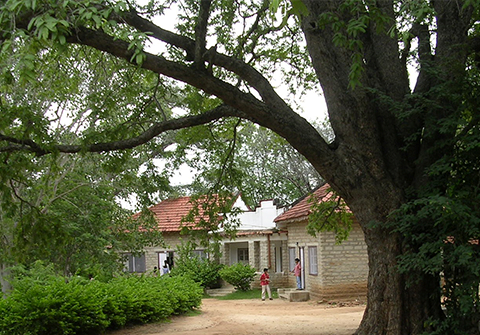
Rishi Valley School
Madanapalle
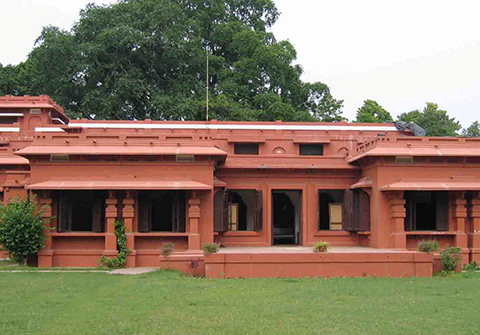
Rajghat Besant School
Varanasi
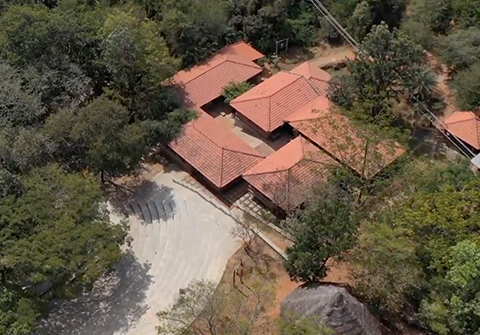
Valley School
Bengaluru
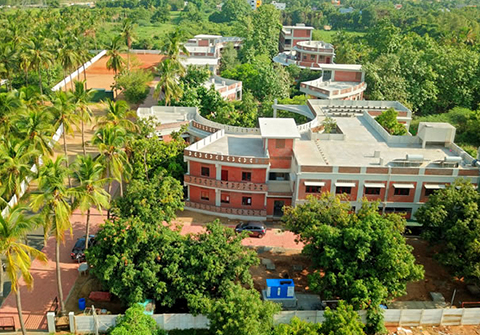
The School – KFI
Chennai

Sahyadri School
Pune
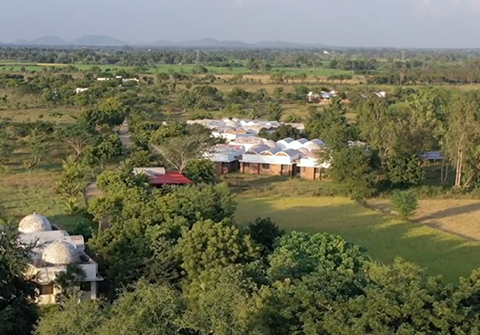
Pathashaala
near Chennai
Recommended reading
Think on These Things
Chosen by Parabola magazine as one of the hundred best spiritual books of the century — talks with students, teachers and parents in India.
The Book of Life
365 quotations from Krishnamurti's talks and writings, one for each day of the year, developed thematically over seven days.
Education and the Significance of Life
The earliest and most expository of his books on education: authority and freedom, discipline, intelligence, the responsibility of teachers and parents.